
To place an order select items and place in cart. Checkout using the "how to pay" option.
Indicate your payment preference to receive link for payment.
We accept Zelle, Venmo, Cashapp, Applepay, credit card or Crypto.
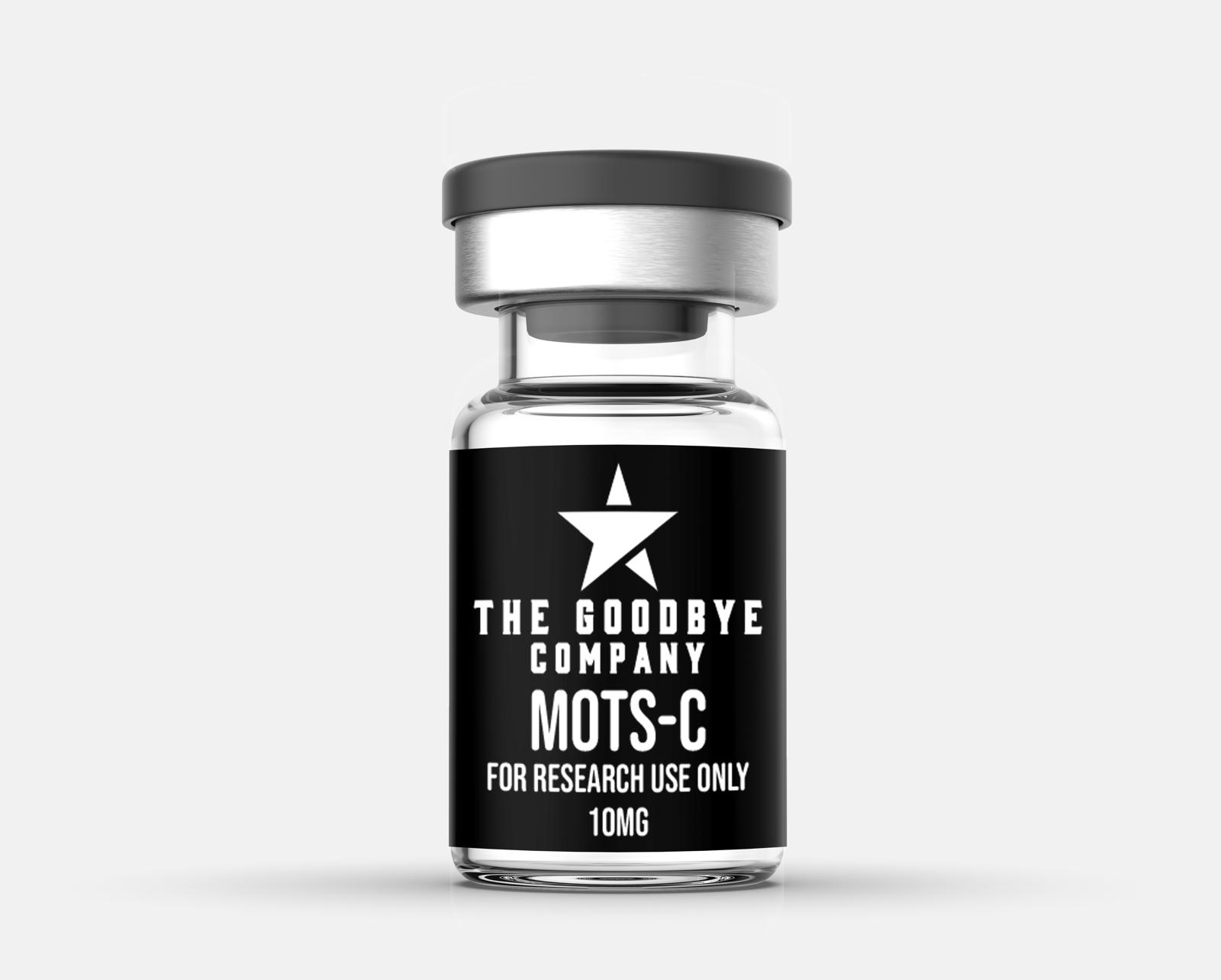
MOTS-C — 10mg per Vial
$60.00
MOTS-C is a 16-amino acid peptide encoded directly within mitochondrial DNA — one of only a handful of peptides in existence with this origin. Discovered in 2015, it has rapidly become one of the most significant compounds in metabolic, exercise science, and longevity research. Unlike synthetic peptides designed to mimic biology, MOTS-C is itself a product of biological evolution — a molecular signal generated inside the mitochondria and transmitted to the nucleus to regulate how cells produce, consume, and adapt to energy demands. In controlled laboratory settings, MOTS-C is studied for its role in AMPK activation, glucose metabolism regulation, mitochondria-to-nucleus signaling, and cellular stress adaptation — positioning it at the intersection of three of the most active frontiers in life sciences research.
Important Note
MOTS-C is not approved for human consumption, medical use, or diagnostic purposes. It is supplied strictly for laboratory research only. Handling should be performed by qualified professionals in an appropriate controlled research setting.
Dosage Reference Chart (Research Use Only)
| Form | Suggested Research Concentration | Example Preparation | Notes |
|---|---|---|---|
| Lyophilized Powder | 10mg per vial | Reconstitute with sterile or bacteriostatic water | Store dry at –20°C until use |
| Reconstituted Solution | 200–500 µg/mL | Dissolve to target concentration for experiments | Stable at 2–8°C for 2–3 weeks; do not freeze once reconstituted |
| Experimental Dosing (animal studies, literature-based) | Variable by study | Adjust according to study design | Preclinical models only |
Features & Properties
- 16-amino acid mitochondria-derived peptide — encoded within mitochondrial DNA
- Studied for AMPK activation and its role in metabolic energy pathway regulation
- Examined in models of glucose metabolism, insulin sensitivity, and energy balance
- Investigated for mitochondria-to-nucleus communication and cellular stress adaptation
- A focal compound in exercise science, metabolic health, and longevity research
- Supplied as lyophilized powder for maximum stability during storage and transport
- Manufactured under research-grade quality standards with HPLC-verified purity ≥99%
Storage & Stability
- Lyophilized peptide: Stable for up to 24 months at –20°C
- Reconstituted solution: Stable for 2–3 weeks at 2–8°C
- Avoid repeated freeze–thaw cycles
- Protect from light and moisture at all times
Usage Restrictions
- For laboratory research use only
- Not approved for human consumption, medical use, or diagnostic purposes
- Handling should be performed by qualified professionals in controlled research settings
- Store securely and keep out of reach of children
- Do not handle during pregnancy or breastfeeding
Frequently Asked Questions
Q1. What does each vial contain? Each vial contains 10mg of MOTS-C peptide, supplied as a sterile lyophilized powder.
Q2. What is the appearance of the product? A fine white to off-white lyophilized powder at the base of the vial.
Q3. How should it be stored? Before reconstitution: Store at –20°C, stable for up to 24 months. After reconstitution: Store refrigerated at 2–8°C, stable for 2–3 weeks.
Q4. How is MOTS-C reconstituted? It is soluble in sterile water or appropriate laboratory buffer. Use aseptic technique during reconstitution to maintain integrity.
Q5. Is MOTS-C sterile? Yes, it is manufactured and sealed under sterile laboratory conditions. Proper sterile handling is still required during reconstitution and use.
Q6. Is this product for human use? No. This peptide is intended for research use only. It is not approved for medical or veterinary use.
Q7. Why is MOTS-C studied? MOTS-C is studied for its role in AMPK activation, mitochondria-to-nucleus signaling, glucose metabolism regulation, and cellular energy adaptation — making it a key compound in metabolic, exercise science, and longevity research.
Q8. What is the vial packaging? A 2mL clear borosilicate glass vial sealed with a butyl rubber stopper and aluminum crimp closure.
Q9. How stable is the peptide during shipping? The lyophilized form is stable under standard shipping conditions. Transfer to long-term storage (–20°C) immediately upon arrival.
Q10. Who can handle this product? Only qualified laboratory researchers with appropriate training in peptide handling and proper protective equipment.

Reviews
There are no reviews yet.