
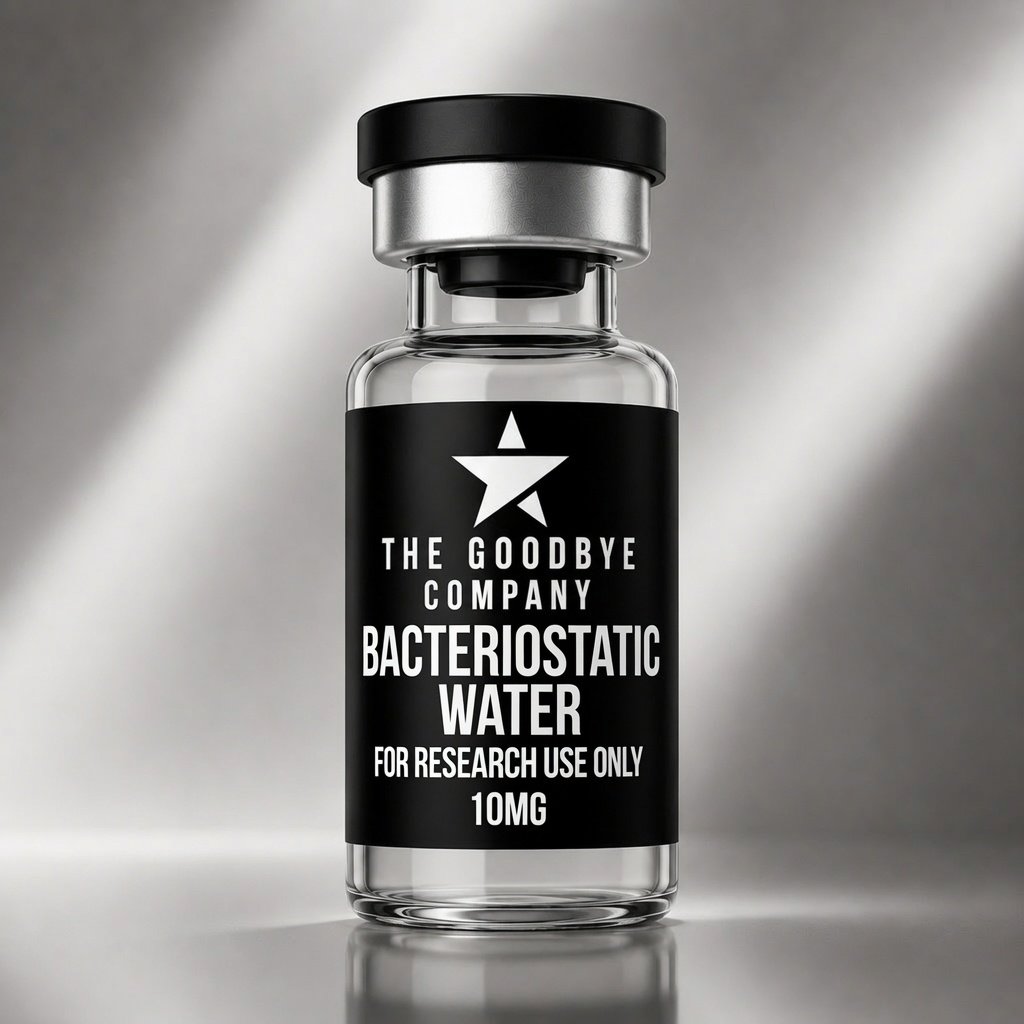
Description
Bacteriostatic Water is sterile water formulated with 0.9% benzyl alcohol, a bacteriostatic agent that inhibits the growth of bacteria within the solution. This property makes it the standard diluent for reconstituting lyophilized research peptides, where a single vial is often accessed multiple times over the course of a study. In controlled laboratory settings, bacteriostatic water provides a stable, low-interference medium for bringing freeze-dried compounds into solution — supporting multiple withdrawals from a single vial while helping preserve the integrity of the reconstituted preparation. It is an essential companion reagent for virtually every lyophilized peptide in research applications.
Important Note
Bacteriostatic Water is not approved for human consumption, medical use, or diagnostic purposes. It is supplied strictly for laboratory research only. Handling should be performed by qualified professionals in an appropriate controlled research setting.
Reconstitution Reference Chart (Research Use Only)
| Peptide Vial | Bacteriostatic Water Added | Resulting Concentration | Notes |
|---|---|---|---|
| 5mg lyophilized | 1 mL | 5 mg/mL | Adjust volume to target working concentration |
| 10mg lyophilized | 2 mL | 5 mg/mL | Common general-purpose dilution |
| 10mg lyophilized | 1 mL | 10 mg/mL | Higher-concentration preparation |
| Variable by study | Adjust as needed | Study-dependent | Preclinical / literature-based models only |
Example: a 10mg vial reconstituted with 2mL bacteriostatic water yields a 5 mg/mL solution. Adjust volume to reach your target research concentration.
Features & Properties
Sterile water formulated with 0.9% benzyl alcohol as a bacteriostatic agent
Standard diluent for reconstituting lyophilized research peptides
Supports multiple withdrawals from a single sealed vial
Clear, colorless, particulate-free solution
Low-interference medium suitable for a wide range of research compounds
Compatible with all lyophilized peptides in the catalog
Manufactured under research-grade quality standards
Storage & Stability
Store sealed at room temperature, below 25°C
Protect from direct light and freezing
Stable until the labeled expiry when unopened
Once accessed, follow standard aseptic handling for multi-use vials
Discard if the solution becomes cloudy or shows particulate matter
Usage Restrictions
For laboratory research use only
Not approved for human consumption, medical use, or diagnostic purposes
Handling should be performed by qualified professionals in controlled research settings
Store securely and keep out of reach of children
Do not handle during pregnancy or breastfeeding
Frequently Asked Questions
Q1. What does each vial contain? Each vial contains 30mL of sterile bacteriostatic water formulated with 0.9% benzyl alcohol.
Q2. What is bacteriostatic water used for? It is used as a diluent to reconstitute lyophilized (freeze-dried) research peptides into a workable solution.
Q3. How is it different from sterile water? Sterile water contains no preservative and is single-use once opened. Bacteriostatic water contains 0.9% benzyl alcohol, which inhibits bacterial growth and allows a vial to be accessed multiple times.
Q4. What is the appearance of the product? A clear, colorless, particulate-free solution.
Q5. How should it be stored? Store sealed at room temperature below 25°C, away from light and freezing.
Q6. Do I need bacteriostatic water for lyophilized peptides? A diluent is required to bring lyophilized compounds into solution. Bacteriostatic water is the standard choice for multi-use research vials.
Q7. Is it sterile? Yes, it is manufactured and sealed under sterile laboratory conditions. Aseptic technique should still be used during each withdrawal.
Q8. Is this product for human use? No. This product is intended for research use only. It is not approved for medical or veterinary use.
Q9. What is the vial packaging? A clear borosilicate glass vial sealed with a butyl rubber stopper and aluminum crimp closure.
Q10. Who can handle this product? Only qualified laboratory researchers with appropriate training in reagent handling and proper protective equipment.
Reviews
There are no reviews yet.